
VANCOUVER,BC,Jan. 13,2025 -- WAT Medical Enterprise collaborated with Concordia University and Mitacs Canada to conduct a study using ObeEnd,the neuromodulation device designed by WAT for weight and health management. The study revealed thatelectroacupuncture may help improve exercise performance and post-exercise recovery by reducing heart rate and perceived exertion during physical activity.
Published in the International Journal of Environmental Research and Public Health,the study highlights the potential benefits of this neuromodulation technology based on traditional Chinese medicine technique for enhancing participation in physical activity.
The research involved 32 healthy participants,who underwent electroacupuncture sessions targeting the PC6 acupuncture point over the course of one week. The study employed the YMCA submaximal bike test to measure cardiovascular responses,including heart rate,systolic blood pressure,and perceived exertion levels.
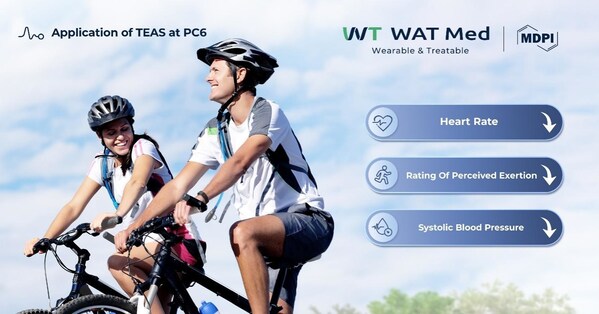
Key findings included a significant reduction in heart rate during the most challenging stage of the exercise test,as well as a decreased perception of effort across all stages. Additionally,participants experienced quicker post-exercise recovery,with systolic blood pressure notably lower five minutes after completing the test. The proposed mechanism of action is through the modulation of the rostral ventrolateral medulla (RVLM),a key area in the brainstem that regulates cardiovascular function and arterial blood pressure.
The study suggests that electroacupuncture could be particularly useful for populations struggling with sedentary lifestyles or exercise-induced fatigue. By making exercise feel easier,this technique could encourage greater adherence to fitness routines,promoting better long-term health outcomes.
Possible application in hypertension management could also be explored in future studies,as the proposed mechanism has the potential to down-regulate the sympathetic nervous system and reduce blood pressure.
References:
https://pmc.ncbi.nlm.nih.gov/articles/PMC11507089/
www.watmedical.com
www.emeterm.com
Disclaimer: This article is reproduced from other media. The purpose of reprinting is to convey more information. It does not mean that this website agrees with its views and is responsible for its authenticity, and does not bear any legal responsibility. All resources on this site are collected on the Internet. The purpose of sharing is for everyone's learning and reference only. If there is copyright or intellectual property infringement, please leave us a message.
©Copyright 2009-2020 Startup Weekly Contact Us SiteMap
